Translife Knowledge Centre
Crossdressing Footwear Guide
Learn how to choose women’s shoes, boots and heels with confidence, including accurate size conversion, foot measurement, width, comfort and heel-height advice.
Why Women's Shoe Sizes Can Feel So Confusing
Buying women's footwear should be straightforward, yet for many crossdressers and transgender women it can quickly become frustrating. Different countries use different sizing systems, manufacturers vary considerably, heel styles alter the fit, and foot width often becomes just as important as the length. The result is that one size may fit perfectly in one brand while feeling completely different in another.
Different Countries Use Different Sizes
UK, EU and US sizing systems all measure footwear differently. Before purchasing any pair of shoes it is important to know exactly which sizing system the manufacturer uses.
Brands Are Not Always Consistent
Even when two brands both state they are a UK Size 9, the internal length, toe shape and overall fit may differ enough for one pair to feel noticeably tighter than another.
Women's Shoes Are Usually Narrower
Many crossdressers naturally have slightly wider feet than women's standard fittings. Choosing the correct width often makes a bigger difference to comfort than simply buying a larger size.
Heel Height Changes The Fit
As heel height increases your foot moves forwards inside the shoe. This changes pressure points, toe space and overall comfort, especially during longer periods of wear.
The Good News
Once you understand how women's footwear sizing works and learn how to measure your feet correctly, buying heels, boots and everyday shoes online becomes far easier. Throughout this guide we'll explain every step and show you how to choose footwear that looks feminine while remaining comfortable to wear.
How to Measure Your Feet Using This Footwear Guide
Accurate foot measurements are the best starting point when choosing crossdressing footwear. Measure both the length and width of your feet, because two people who normally wear the same UK size may still require different styles or fittings.
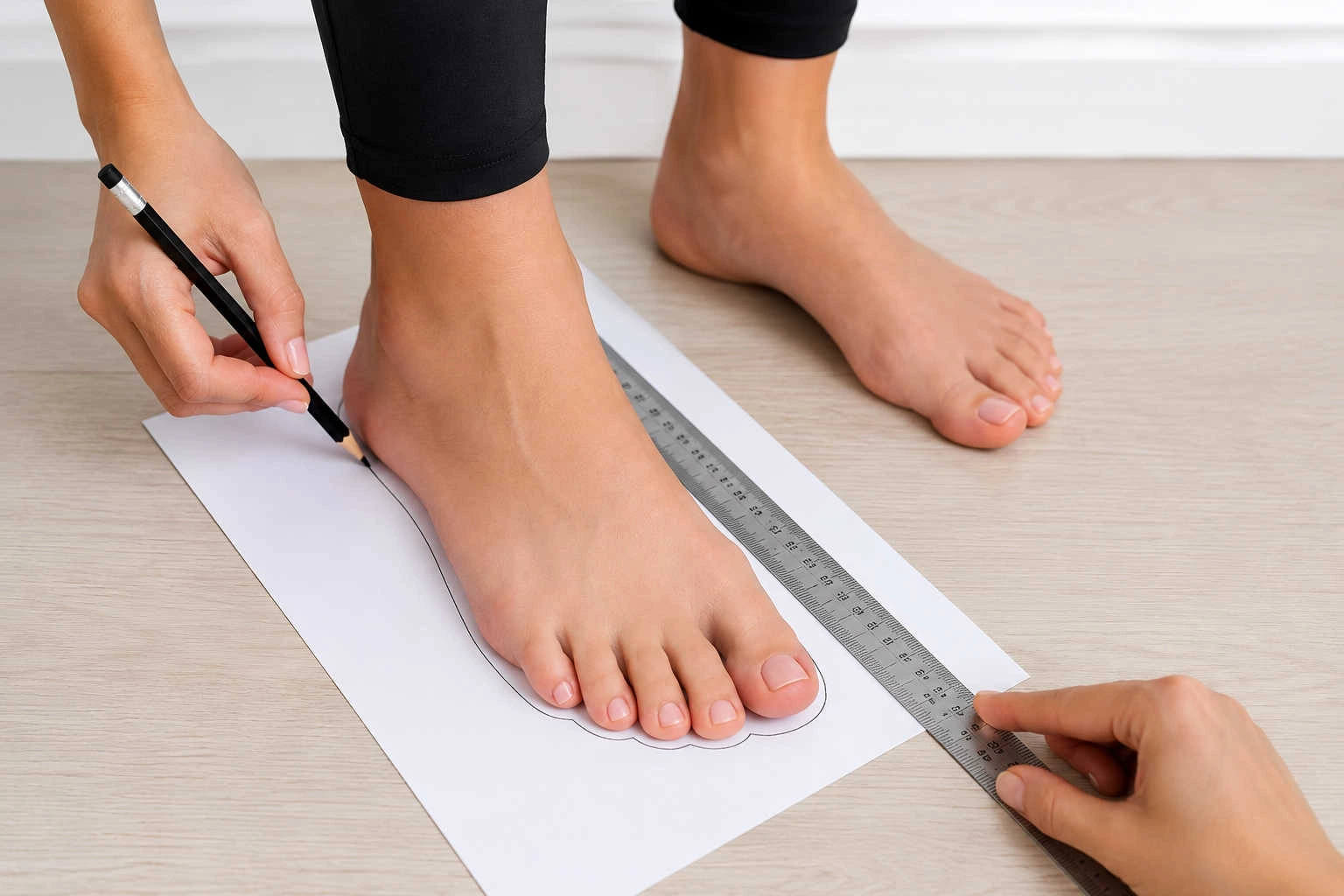
Measure Your Foot Length
Place a sheet of paper on a hard, level floor and stand naturally with your full weight on the foot being measured. Trace around the foot while keeping the pencil as upright as possible.
- Mark the back of the heel and the end of the longest toe.
- Measure the straight-line distance between the two marks.
- Record the result in centimetres and millimetres.
- Repeat the process for your other foot.
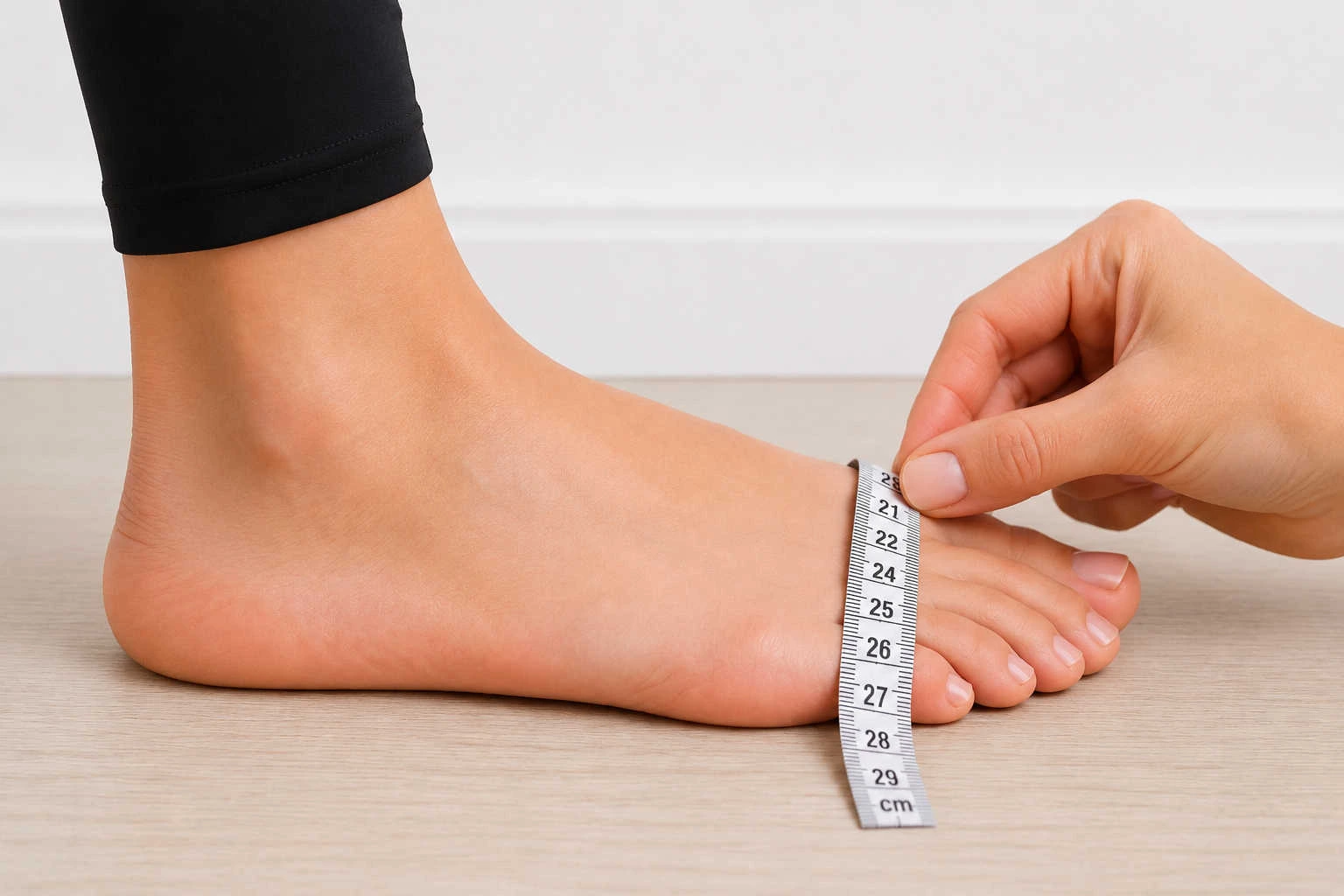
Measure Your Foot Width
Wrap a flexible tape measure around the widest part of the forefoot, usually across the ball of the foot. The tape should sit closely against the skin without compressing the foot.
- Keep your foot flat on the floor while measuring.
- Measure around the widest part of the forefoot.
- Do not pull the measuring tape excessively tight.
- Record the larger measurement if your feet differ.
Measure While Standing
Your feet spread slightly under your body weight, so measurements taken while standing are more useful than measurements taken while sitting.
Measure Both Feet
It is common for one foot to be slightly larger than the other. Choose footwear using the measurements from your larger foot.
Measure Later in the Day
Feet can expand after walking and standing. Measuring later in the day provides a more realistic guide for comfortable everyday wear.
Wear Your Usual Hosiery
Wear the tights, stockings or socks you expect to use with the footwear, as thicker materials can affect the finished fit.
Footwear Guide to Translife UK, Pleaser USA and European Sizes
Translife lists footwear using the UK size our customers normally recognise. A Translife UK 7, for example, is selected to fit a standard width UK male size 7 foot, even though the original Pleaser USA box may show a different American size.
Shop Using Your Normal UK Size
On the Translife website, the UK size is shown first. Therefore, someone who normally wears a standard-width UK male size 8 should begin by looking at Translife footwear listed as UK 8.
Pleaser Uses USA Sizing
Pleaser USA footwear boxes display the manufacturer's American size. This number is normally three sizes higher than the UK size used by Translife, although the individual style information should always be checked.
| Translife UK size | Pleaser USA box size | Approx. European size |
|---|---|---|
| UK 3 | USA 6 | EU 36 |
| UK 4 | USA 7 | EU 37 |
| UK 5 | USA 8 | EU 38 |
| UK 6 | USA 9 | EU 39 |
| UK 7 | USA 10 | EU 40 |
| UK 8 | USA 11 | EU 41 |
| UK 9 | USA 12 | EU 42 |
| UK 10 | USA 13 | EU 43 |
| UK 11 | USA 14 | EU 44 |
| UK 12 | USA 15 | EU 45 |
| UK 13 | USA 16 | EU 46 |
Footwear Fit Is a Relationship Between Length and Width
The printed size is only one part of the fit. Toe shape, foot width, straps, materials and the construction of the upper can all affect how a particular pair feels.
Court Shoes and Closed-Toe Heels
Check foot length, width and toe shape. Pointed styles usually provide less toe room than rounded or open-toe designs.
Sandals and Adjustable Styles
Adjustable straps can make a style more accommodating, but the foot still needs to sit correctly on the sole without extending beyond the front or sides.
Ankle and Knee-High Boots
In addition to foot length and width, check the ankle opening, shaft height and calf circumference shown for the individual style.
Thigh-High Boots
Thigh boots introduce additional calf and thigh measurements. Always compare your own circumferences with the style-specific measurements before purchasing.
Standard and Wide-Fitting Pleaser Footwear
Translife has extensive experience supplying Pleaser USA footwear. Most styles use a standard fitting, but many are more accommodating than customers initially expect, particularly open-toe designs, adjustable sandals and styles made from materials with some natural flexibility.
Dedicated wide-fitting choices are more limited within the Pleaser range. Customers with wider feet should therefore check the individual style measurements and construction rather than assuming that every shoe marked with the same size will fit identically.
Always Check the Individual Style Measurements
This conversion table provides a useful starting point, but the measurements on the individual product page should always take priority. This is especially important for boots, where calf, thigh, shaft and opening measurements can be just as important as the shoe size.
Choosing the Right Heel Height
Heel height affects comfort, balance, posture and how confidently you can walk. This footwear guide explains the practical differences between low heels, classic high heels and dramatic platform styles.
Low Heels
Low heels are a practical choice for customers who are new to feminine footwear or expect to stand and walk for longer periods.
- Suitable for first-time heel wearers
- Easier for walking outdoors
- Less pressure on the front of the foot
- Usually more stable than narrow stilettos
Mid-Height Heels
Mid-height heels offer a useful balance between a feminine appearance and manageable comfort.
- A sensible starting point for many customers
- Creates a more feminine posture
- Available in shoes, sandals and boots
- Suitable for many dressing-service appointments
High Heels
High heels provide the classic feminine look many Translife customers want, but they require more balance and practice.
- Creates a strong feminine silhouette
- Best introduced gradually
- Places more pressure on the ball of the foot
- Stability depends heavily on the heel shape
Extreme and Platform Heels
Extreme heels are generally selected for their dramatic appearance. Platforms can reduce the effective angle beneath the foot.
- Designed for a dramatic appearance
- Platforms reduce the effective rise
- Not usually recommended as a first heel
- Best practised indoors before longer wear
Why Platform Height Matters
A shoe may have a very high advertised heel but feel less steep because of the platform beneath the front of the foot. The practical rise is approximately the heel height minus the platform height.
Platform calculation is only a guide. Arch shape, sole flexibility, heel width and support around the foot also affect comfort and stability.
Heel Shape Can Matter as Much as Heel Height
Two pairs with the same heel height can feel completely different. Wider heels usually provide greater stability, while narrow stilettos require more controlled balance.
Block Heels
A broad heel creates a larger contact area with the floor and normally feels more stable than a narrow heel of the same height.
Wedge Heels
A wedge supports more of the sole and can feel secure, although taller wedges may still be difficult on uneven outdoor surfaces.
Stiletto Heels
Stilettos create a classic feminine appearance but have a much smaller contact point and require greater balance and practice.
Platform Heels
Platforms reduce the effective rise beneath the foot but can feel heavier and less flexible than a conventional single-sole shoe.
A Sensible Starting Point
Customers who have never worn heels should not feel pressured to begin with an extreme style. Starting with a secure lower heel helps develop balance and allows you to become familiar with the changes to posture and stride.
Choosing the Right Toe Shape
Toe shape affects both the appearance of feminine footwear and the amount of space available across the front of the foot. The best choice should complement the style you want without compressing your toes.
Round Toe
Round-toe footwear generally provides the most natural space around the toes. It is often a comfortable choice for longer wear and for customers with a broader forefoot.
- Usually offers more toe room
- Suitable for longer periods of wear
- Common in court shoes and boots
- A practical first choice
Almond Toe
Almond-toe footwear creates a more tapered feminine shape while retaining more room than a sharply pointed style. It is a useful balance between elegance and comfort.
- More tapered than a round toe
- Elegant without being extremely narrow
- Suitable for many foot shapes
- Popular in classic court shoes
Pointed Toe
Pointed-toe footwear creates a long, refined silhouette, but the tapered front can reduce usable space. The point may extend beyond the toes without increasing the internal width.
- Creates an elegant elongated appearance
- Can feel restrictive across wider feet
- May require careful size selection
- Best checked against product guidance
Square Toe
Square-toe footwear provides a straighter front edge and can offer useful space across the toes. The amount of room still depends on the width and internal construction of the individual style.
- Can provide useful forefoot space
- Modern and distinctive appearance
- Available in shoes, sandals and boots
- Still requires width to be checked
How the Front of the Shoe Should Fit
A suitable fit should feel secure without forcing the toes together or placing painful pressure across the widest part of the foot.
Toe Shape Does Not Replace Width Measurement
A round or square toe may appear wider, but that does not guarantee the footwear has a wide fitting. Length, width, upper material and the position of seams or straps all affect comfort.
Use toe shape as part of your footwear decision, but always check the individual product information and contact Translife when you need help choosing between styles.
Heel Types and Stability
Heel height is only part of the fit. The width, shape and position of the heel affect how stable feminine footwear feels when standing, turning and walking.
Block Heel
A block heel has a broad base that creates more contact with the floor. It is usually easier to balance in than a narrow heel of the same height.
- Good general stability
- Suitable for newer heel wearers
- Useful for standing and walking
- More forgiving on firm outdoor surfaces
Wedge Heel
A wedge extends beneath much of the sole, providing continuous support from the heel towards the front of the foot.
- Broad support beneath the foot
- Often feels secure on level ground
- Can be heavier than a conventional heel
- May feel rigid on uneven surfaces
Kitten Heel
A kitten heel is lower and usually narrow. The reduced height can make it easier to wear, although the small heel base still requires controlled balance.
- Lower and more discreet
- Creates a feminine appearance
- Less demanding than a high stiletto
- Still less stable than a block heel
Stiletto Heel
A stiletto has a very small contact point with the floor. It provides the classic high-heel silhouette but demands greater ankle strength, balance and walking control.
- Classic feminine appearance
- Small floor-contact area
- Less forgiving on uneven ground
- Best introduced gradually
Three Factors That Affect Heel Stability
Two pairs with the same advertised heel height can feel very different because their support and balance points are not identical.
Heel Base Width
A wider heel base creates a larger area of contact with the floor. This normally reduces side-to-side movement and makes standing feel more secure.
Heel Position
A heel positioned directly beneath the natural centre of the heel usually feels more balanced than one set further back beneath the shoe.
Upper Support
An ankle strap, enclosed heel or supportive boot shaft can help control the foot and reduce movement even when the heel itself is narrow.
Same Heel Height, Different Experience
These two styles may both have a four-inch heel, but they will not normally feel equally stable.
Four-Inch Block Heel
The broad heel base provides more floor contact and greater resistance to side-to-side movement. This is generally the easier option for standing and walking.
Four-Inch Stiletto
The narrow heel creates a much smaller balance point. The wearer must control the ankle more carefully, particularly when turning or walking on uneven surfaces.
The Walking Surface Matters
Heel stability depends on the surface beneath you as well as the footwear itself.
Choosing Boots That Fit Your Calves and Thighs
Boot sizing involves more than foot length. As the shaft becomes taller, calf circumference, thigh circumference and shaft height become increasingly important to comfort and fit.
Ankle Boots
Ankle boots are generally the simplest boot style to fit because the shaft does not need to pass over the widest part of the calf.
- Usually easier to put on and remove
- Calf circumference is rarely critical
- Suitable with trousers, skirts and dresses
- A practical first boot style
Mid-Calf Boots
Mid-calf boots rise further up the leg and may begin to interact with the lower calf. Shaft opening and upper flexibility should be checked.
- More coverage than an ankle boot
- May need lower-calf measurement
- Can visually shorten the leg
- Fit varies significantly by style
Knee-High Boots
Knee-high boots must accommodate the widest part of the calf. Circumference, shaft height and zip construction all affect whether the boot will fasten comfortably.
- Measure the widest calf point
- Check the product shaft circumference
- Allow room for hosiery or leggings
- Do not force a zip under tension
Over-the-Knee and Thigh Boots
Taller boots require additional measurements because they must fit the calf, knee area and thigh as well as the foot.
- Measure calf and thigh circumference
- Check total shaft height
- Consider stretch and fastening design
- Allow for movement when bending the knee
The Three Measurements That Matter
Measure while standing and wearing the type of hosiery or clothing you expect to wear inside the boots.
Wrap a soft tape measure around the widest part of the calf. Keep the tape level and comfortably against the leg without pulling it tight.
For thigh-high boots, measure around the leg at the point where the top of the boot is expected to sit.
Measure vertically from the floor beside the heel to the intended top of the boot. Product measurements may be taken from the sole or arch, so check each product page carefully.
Matching Boot Style to Leg Measurements
The taller the boot, the more areas of the leg must fit within the shaft.
Do Not Match Your Measurement Exactly
A boot shaft generally needs some allowance beyond your body measurement so that it can be fastened and worn comfortably. The required allowance depends on whether the upper is rigid, lightly flexible or designed to stretch.
Also allow for tights, stockings, leggings or trousers that may be worn inside the boot. Always use the individual product guidance rather than assuming every style from the same brand will fit identically.
Zip, Stretch and Lace-Up Boots
Boot construction affects how much adjustment is available around the calf and thigh.
How a Well-Fitting Boot Should Feel
Choosing the Right Footwear Material
The material used to make a shoe or boot affects comfort, flexibility, appearance, maintenance and durability.
Patent (PVC)
High-gloss finish with dramatic visual impact.
- Statement finish
- Easy to wipe clean
- Lower breathability
- Firm feel
Matte PU
A versatile everyday material.
- Natural appearance
- Comfortable
- Easy care
- Popular choice
Faux Leather
Classic leather-style finish.
- Traditional look
- Versatile
- Simple maintenance
- Wide choice
Stretch Materials
Ideal for many tall boots.
- Flexible fit
- Comfortable
- Useful for calf fit
- Movement friendly
Textiles
Lightweight and breathable.
- Cooler to wear
- Lightweight
- Comfortable
- Care varies
Material Comparison
Choosing the Best Material
Matte PU and faux leather are excellent all-round choices.
Patent finishes create maximum visual impact.
Stretch uppers often improve comfort and fit.
Choosing the Right Fastening for Comfort and Security
The fastening used on feminine footwear affects how easily the shoe fits, how secure it feels when walking and how much adjustment is available for different foot shapes.
Slip-On Shoes
Quick to wear with a clean appearance but rely on accurate sizing for a secure fit.
- Fast to put on
- No adjustment
- Best with accurate sizing
- Suitable for everyday wear
Buckles & Ankle Straps
Offer additional security by helping keep the heel in position.
- More secure fit
- Small adjustment range
- Reduces heel lift
- Popular on heels
Lace-Up Styles
Provide the greatest opportunity to fine tune the fit across the foot.
- Excellent adjustment
- Good support
- Ideal for varying widths
- Secure walking
Zip Fastenings
Common on boots, allowing quick fitting while maintaining a neat appearance.
- Easy to use
- Little adjustment
- Depends on correct shaft size
- Ideal for boots
Choosing the Best Fastening
Choose lace-up or ankle strap styles when you want the most stable fit.
Slip-on footwear is convenient when the shoe already fits well.
Full-length zips combined with stretch panels often provide the easiest entry.
Fastening Comparison
Common Fitting Mistakes
- Fastening straps too tightly.
- Ignoring foot width when choosing slip-on styles.
- Forcing boot zips closed.
- Leaving laces too loose when wearing heels.
Looking After Your Feminine Footwear
Regular care helps your footwear remain comfortable, attractive and ready to wear for years.
Clean After Wearing
Remove dust and marks with a soft cloth and use products suitable for the material.
Store Correctly
Keep pairs in a cool, dry place away from direct sunlight. Shoe boxes or dust bags help reduce scratches.
Protect the Shape
Use shoe trees or tissue paper to help maintain the original shape between wears.
Inspect Regularly
Check heels, soles, straps and fastenings so minor issues can be addressed before they worsen.
Simple Care Routine
Material Care Guide
- Patent finishes: wipe with a damp microfibre cloth.
- PU and faux leather: clean gently with mild cleaner.
- Stretch materials: avoid excessive heat when drying.
- Textiles: follow the manufacturer's cleaning advice.
Footwear Guide Frequently Asked Questions
These answers cover some of the most common questions customers ask when choosing feminine shoes and boots.
Frequently Asked Questions
Should I automatically choose a larger size in high heels?
No. Do not automatically size up simply because the footwear has a high heel. Follow the sizing guidance for the individual brand and style, as fit can vary considerably.
Which footwear is easiest for a beginner to wear?
A lower or mid-height block heel with an ankle strap is usually a good starting point. It provides more stability and security than a high stiletto or an unsecured court shoe.
What should I choose if I have wider feet?
Look for round, almond or square toe shapes, adjustable fastenings and softer materials. Avoid assuming that every style from the same brand will have the same width.
How do I know whether tall boots will fit my calves?
Measure the widest part of both calves while standing and compare the larger measurement with the product information. Also check the shaft height and whether the boot includes stretch panels or adjustment.
Does Translife stock feminine footwear in larger sizes?
Yes. Translife offers feminine shoes and boots in larger sizes, including a wide selection of Pleaser footwear suitable for crossdressers and transgender customers.
Can Sophie help me choose before I order?
Yes. Send Sophie your usual shoe size, foot measurements, preferred style and intended use. She can help you narrow down the most suitable options before you buy.
Need Help Choosing the Right Feminine Footwear?
Choosing shoes or boots can feel difficult when sizing, heel height, width and leg measurements all need to be considered. Sophie can help you find styles that are more likely to fit comfortably and suit how you want to wear them.
Help interpreting larger-size footwear measurements
Advice on heel height, stability and experience level
Guidance on calf and thigh fit for taller boots
Friendly and confidential support from an established UK company